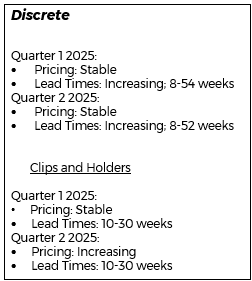
As we move through 2025, the electronics supply chain continues to evolve in response to global pressures, technological demand, and regional disruptions. Based on the Future Electronics Q2 2025 Market Conditions Report, here is a breakdown of the latest trends and their impact on sourcing strategies.
Looking ahead, the Q2 report underscores the importance of agility and foresight in today’s electronics supply chain. While some categories are stabilizing, others remain under pressure due to geopolitical tensions, labor shortages, and fluctuating demand. At Burton EMS, we support your operations with proactive supply chain strategies and industry insight.
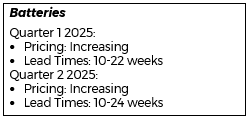
Pricing on batteries remains an upward trend, and lead times have stretched to 10-24 weeks.
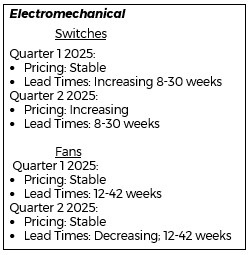
Electromechanical parts such as switches and fans show stable pricing, but lead times remain extended (up to 42 weeks).
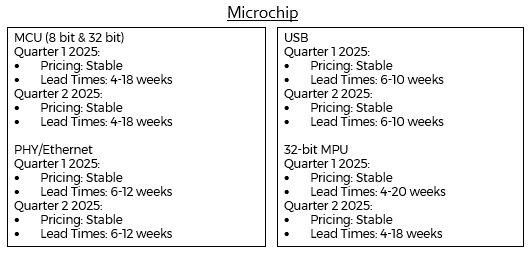
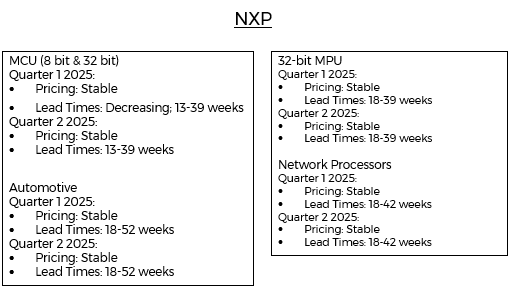
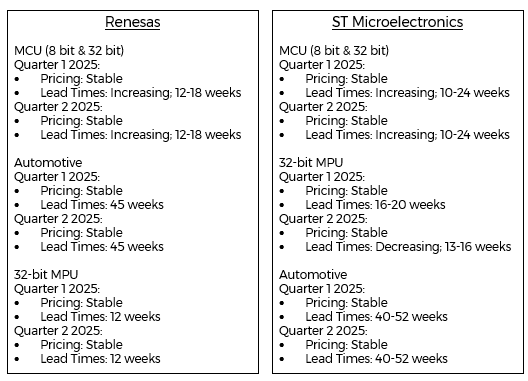
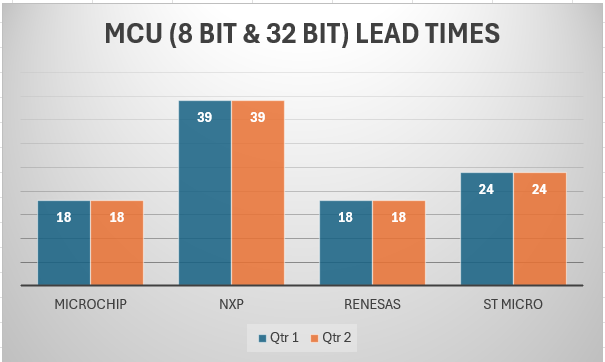
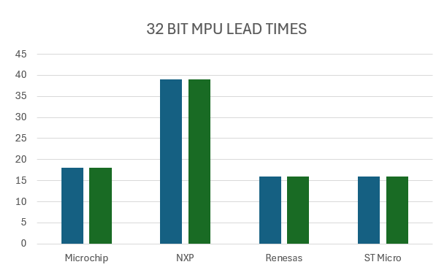
While certain categories, such as MCUs and PHY/Ethernet components have maintained stable pricing and lead times, other areas are experiencing renewed pressure.
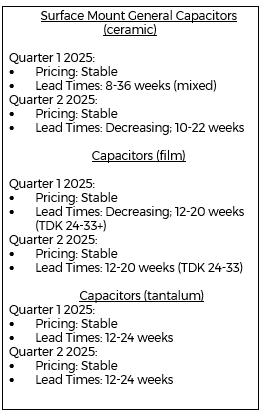
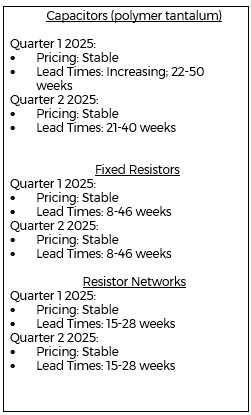
Passive Components are showing continued long lead times. Polymer Tantalum Capacitors have stabilized at 22-50 week lead times, and Fixed Resistors are up to 46 weeks. Raw Material constraints are causing Electrolytic Capacitors and Filters to experience increased lead times.
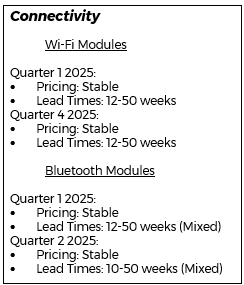
Wi-Fi and Bluetooth Modules remain extended (12-50 weeks), with no significant pricing shifts.