
Designing for Production: How DFM Identifies Manufacturing Risks Before the Build
A PCB design can look correct on screen and still create problems once it reaches the manufacturing floor. Component spacing, pad geometry, solder mask, silkscreen, orientation, through-hole clearances, and other small details can affect yield, efficiency, and reliability.
Most of these issues are easier and less expensive to address early. That is why Design for Manufacturability (DFM) matters and why we treat it as a standard part of every quote at Burton Electronics Manufacturing Services.
DFM with Every Quote
Many contract manufacturers treat DFM as an optional service, performed later in the process, or only after an order is placed. At Burton, it is built into our quoting process. When you send us an RFQ, you receive more than a price. You receive manufacturing feedback from a team that has already looked at how your design will actually be built. Our goal is simple: surface potential risks while they are still easy to resolve.
Why Start DFM at the Quote Stage?
Manufacturability issues that surface at first article or during production often trigger engineering changes, schedule delays, rework, or additional builds. By reviewing the design during the quoting process, we give customers the chance to evaluate and address concerns before committing to production.
This early feedback is a practical advantage. It reduces the chance of surprises later and helps ensure the design and the manufacturing process are aligned from the start.
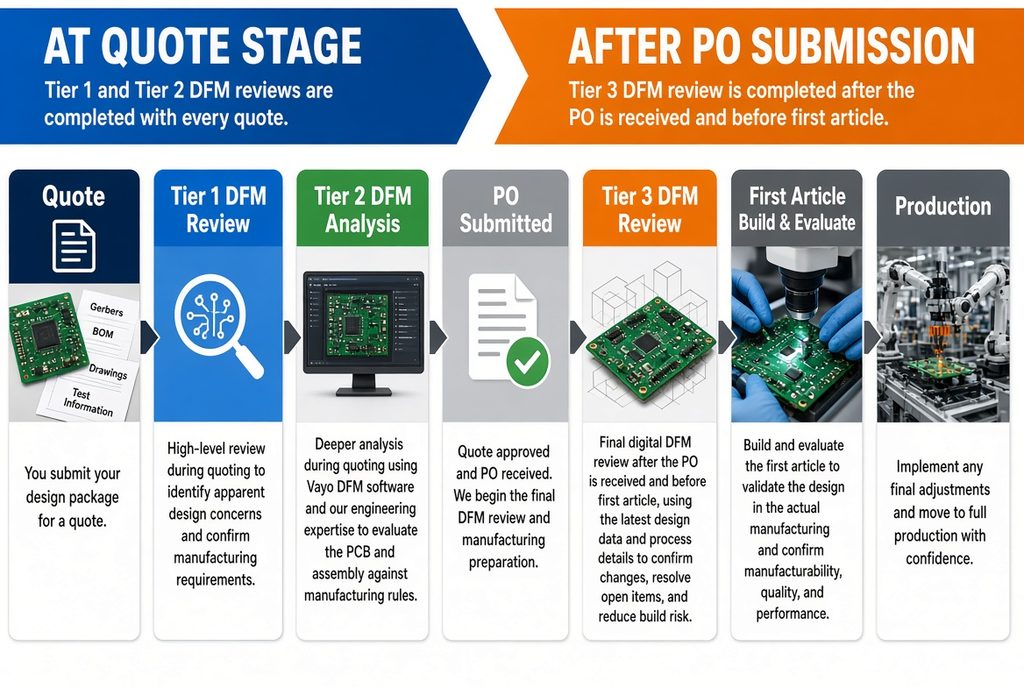
Burton’s Three-Tier DFM Process
Our review becomes more detailed as a project moves forward.
Tier 1 – Initial DFM Review
Performed during quoting. We identify the more apparent manufacturability concerns in the supplied design data and flag items that may need clarification before the project advances.
Tier 2 – Detailed DFM Analysis
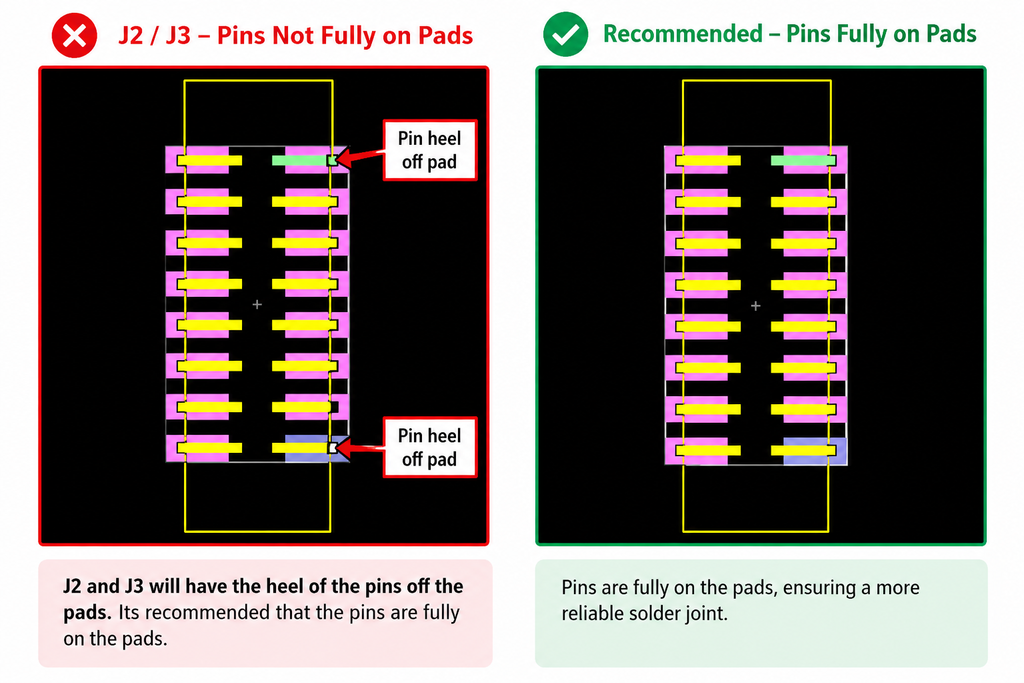
Also performed during quoting. Using specialized DFM software combined with our manufacturing experience, we evaluate the PCB and assembly against process rules. Typical focus areas include component placement and spacing, footprint and pad relationships, solder mask and silkscreen, vias, through-hole components, orientation, and other conditions that can affect assembly.
The objective is not to redesign the product. It is to highlight areas of unnecessary manufacturing risk so the customer can decide how (or whether) to address them before production begins.
Tier 3 – First Article and Production Review
As the assembly moves into first article and production, digital findings are paired with real process feedback. We examine how the design interacts with printing, placement, soldering, inspection, and test. This creates a practical feedback loop between design and manufacturing.
We use Vayo DFM software to support the process. It performs automated PCB and PCBA analysis against manufacturing rules in a 3D environment, evaluating footprints, placement, routing, vias, solder mask, silkscreen, pin-to-pad relationships, test points, and process-related factors such as paste printing, SMT placement, reflow, through-hole insertion, wave or selective soldering, test, and AOI. The 3D view is useful because it shows potential issues in the context of the assembled board rather than as isolated rule violations. Software identifies conditions that deserve attention; experienced manufacturing engineers determine what those findings mean for the specific assembly, equipment, and process. That combination is what makes the review valuable.
What Early DFM Can Help Prevent
Depending on the design, early identification of manufacturability concerns can reduce the risk of:
*Soldering defects
*Component placement or clearance problems
*Pad or footprint mismatches
*Solder-mask or silkscreen conflicts
*Polarity and orientation issues
*Through-hole / SMT process conflicts.
*Limited inspection or test access
*Unnecessary rework or manual operations
Not every finding requires a design change. Sometimes the correct response is simply confirming design intent. Other times a small adjustment makes the assembly more consistent and efficient to build. Having that conversation before production is the point.
A Practical Advantage for OEMs
A useful DFM review is more than a list of violations. It is a conversation between the people who designed the product and the people who will build it. For OEMs focused on functionality, performance, and time-to-market, an experienced manufacturing perspective can be especially valuable. By including DFM with every quote, we give customers that perspective early, before decisions are locked in and costs are harder to change.
When you are ready to quote your next PCB assembly, send us your design package. We will price the BOM and also take a closer look at how your product will move from design to production.
